
29 Oct 2026 · @David
The blank wall
Every mural I have painted began the same way: a blank wall, and me standing in front of it. The paint was never the hard part. Paint can be bought, brushes can be bought, and even the scaffolding can be rented by the day. What cannot be bought is the picture that is not there yet.
For most of my life, software was a different kind of wall. It had a locked door, and only people who spoke its language held the key. I am not a programmer. I am an artist. Yet this year I built an app, end to end, by talking to an AI the way I would talk to an assistant on a scaffold: hold this, move that, no, warmer.
The door is open now. And standing on the other side of it, I found the same thing I always found in front of a wall. The tools were never the question. The question was always: what should be here?
The door that opened
In February 2025, the AI researcher Andrej Karpathy gave this moment a name: vibe coding. You describe what you want in plain language, the machine writes the code, and you guide it by what you see. He called it a kind of coding where you forget the code even exists.
The numbers followed the name. According to a Pebblebed essay citing GitHub’s figures, 36 million new developers joined GitHub in 2025. In the five years before, the yearly average was 15 to 25 million. Nearly 80% of the newcomers used an AI assistant in their first week.
At Sequoia’s AI Ascent this year, Anthropic’s Boris Cherny reached for an old image: the printing press. In the 1400s, reading and writing belonged to professionals, and only about one European in ten could read. Within fifty years of the press, more was printed than in the previous thousand. Software, he argues, is walking the same road, only faster. The best builder of accounting software will be an accountant who knows what to build.
When making gets cheap, meaning gets expensive
Here is the part the excitement tends to skip. When anyone can build anything, the building stops being the achievement. A writer at WeRSM put it plainly: when execution becomes almost infinite, what grows scarce is judgment. Creation starts to look less like programming and more like directing.
The essayist behind The Creator Class goes one step further. For decades the economy was shaped by a shortage of programmers. Now the shortage moves elsewhere: good ideas, taste, an understanding of people, and knowing which problem is truly worth solving.
There is also a quiet danger here, and a developer named it well in an online discussion. If everyone builds with the same machines, we may all drift toward the machine’s average taste. A thousand new apps, and all of them the same app. The tools can multiply our hands. They cannot, by themselves, multiply our visions.
Imagination is received, not manufactured
We like to speak about imagination as a skill, something you can train like a muscle. I don’t believe that. The real spark does not come from effort. It comes from somewhere higher than the hand that holds the brush, and in the moments, it arrives, the picture feels less invented than received. Practice does not create that spark. What practice does is keep the hand ready and the eye open, so that when the gift comes, you are standing where it can find you.
But a ready hand is not enough. Someone can practise every day for thirty years and still face an empty wall, if they live in a low place: a heavy home, a broken relationship, a long sadness. In that state, the mind only replays the few images that got stuck in it. To reach the realm where new pictures are born, a person has to raise their inner state first. The gift comes to the open, not only to the trained.
Karpathy said something at the same conference that I keep returning to: you can outsource your thinking, but you cannot outsource your understanding. I would add one word to it. You cannot outsource your wanting. A machine can offer a thousand directions. Only a person can feel which one is alive.
This is why I do not believe imagination becomes less important in the age of AI. It becomes the whole game. The old question was “can I build it?” The new question is older than software, older than paint: “is it worth building?”
The new building chain
If code is now a brush anyone can hold, then the chain of making has a new shape. It starts long before the first line of code:
- Notice. A frustration, a gap, something that should exist and does not.
- Imagine. Turn the feeling into possible directions, more than one.
- Shape. Pick one and give it form: who it is for, what it solves, why now.
- Test. Look honestly at who already does it, and what could break it.
- Build. Only now does the code arrive, and today it arrives fast.
Most tools today crowd around step five. Very few help with the steps before it, where most good ideas quietly die.
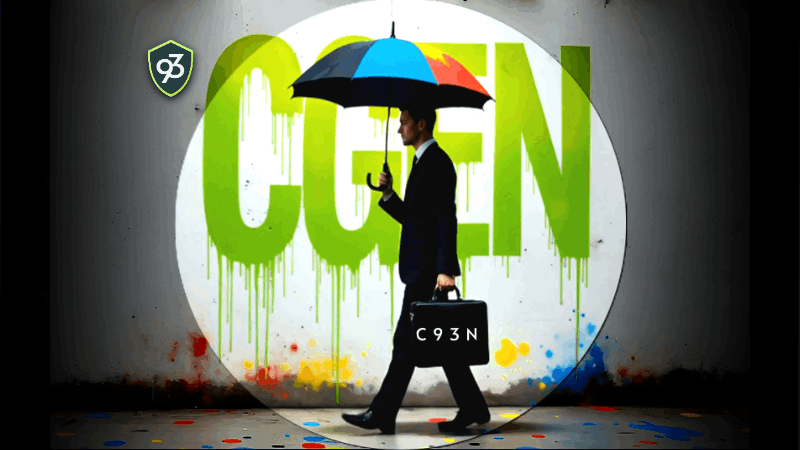
That gap is why I built CGEN, and in particular its Concept Generator. You give it a field, a frustration and a direction. It searches the real market, then returns three concept sketches you can turn over in your hands, like thumbnails before a mural. Choose one, and it develops it into a full concept page, including an honest look at competitors and risks.
It does not imagine for you. Nothing should. What it can do is what a good studio assistant does: lay out the paints, show you what others have already painted, and give you a few rough sketches to argue with. The final picture is still yours.
The wall is still blank
The machines have given us more hands than we ever had. That is a gift, and also a test. When everyone can build, the world will fill with things. Some of them will be noise, and some will be pictures that only one particular person could have seen.
So the invitation of this new era is not “learn to code”, and not even “learn to prompt”. It is older and simpler: learn to look. Stand in front of the blank wall a little longer. Ask what is missing, who is waiting for it, and why you care.
The brush is in your hand now. The wall is still blank. What will you put there?
Sources
- Vibe coding (Wikipedia)
- Software Is Dead (Tammie Siew, Pebblebed, March 2026)
- When three of AI’s top builders tell you coding is solved (Grant Harvey, The Neuron, May 2026)
- Vibe Coding Is Changing Who Gets to Build (WeRSM, May 2026)
- The Creator Class (JSN, June 2026)
- Discussion on taste and LLMs (Hacker News)
“The machine brings the hands. The vision is still yours to receive.”
Explore your next concept on CGEN → c93n.com